Neck pain is a common issue that can affect people of all ages. It often results from poor posture, stress, or overuse of the neck muscles. Fortunately, yoga can be an effective way to alleviate tension and relieve neck pain. Here are five yoga poses that target the neck and upper back muscles to provide relief and improve flexibility.
1. Cat-Cow Pose (Marjaryasana-Bitilasana)
The Cat-Cow pose is a gentle flow between two movements that stretches the spine and relieves tension in the neck and upper back.
How to do it:
– Begin in a tabletop position on your hands and knees.
– Inhale as you arch your back, lifting your chest and tailbone toward the ceiling (Cow Pose).
– Exhale as you round your spine, tucking your chin toward your chest and drawing your tailbone down (Cat Pose).
– Repeat for 5–10 rounds, focusing on the movement of your spine and neck.
This dynamic stretch helps improve flexibility and mobility in the neck while reducing stiffness and tension.
2. Seated Forward Fold (Paschimottanasana)
The Seated Forward Fold stretches the entire back of the body, including the neck, shoulders, and spine.
How to do it:
– Sit on the floor with your legs extended straight in front of you.
– Inhale and lengthen your spine, sitting up tall.
– Exhale as you slowly fold forward from your hips, keeping your spine straight.
– Reach for your feet or shins, keeping your neck relaxed.
– Hold the pose for 20–30 seconds, breathing deeply.
This pose helps relieve tightness in the neck and shoulders while calming the nervous system.
3. Thread the Needle Pose (Parsva Balasana)
Thread the Needle is a gentle twist that helps release tension in the shoulders and neck while also stretching the upper back.
How to do it:
– Start in a tabletop position on your hands and knees.
– Inhale, and as you exhale, slide your right arm underneath your left arm, bringing your right shoulder and ear to the floor.
– Keep your left hand planted on the ground for support or extend it forward for a deeper stretch.
– Hold for 20–30 seconds, then switch sides.
This pose targets the neck and upper back, helping to release stiffness and improve circulation.
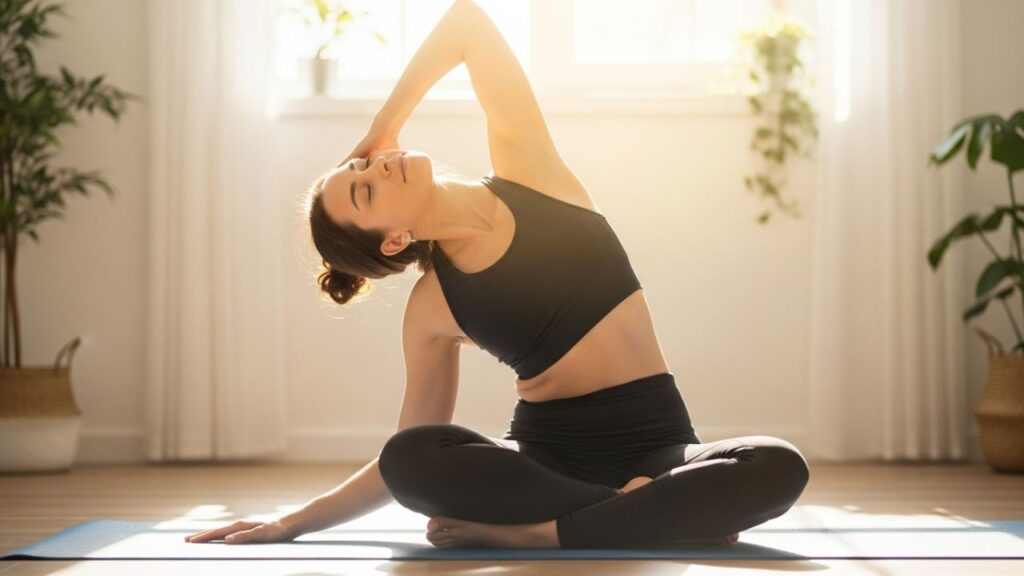
4. Neck Stretch (Sukhasana)
The Neck Stretch pose targets the neck muscles directly, providing a simple yet effective way to release tension.
How to do it:
– Sit comfortably in a cross-legged position (Sukhasana) or on a chair.
– Inhale and sit up tall, lengthening your spine.
– Slowly lower your right ear toward your right shoulder, feeling a stretch on the left side of your neck.
– For a deeper stretch, gently hold your head with your right hand.
– Hold for 20–30 seconds, then switch sides.
This simple stretch can be done throughout the day to relieve neck tension caused by sitting at a desk or looking at a screen for long periods.
5. Child’s Pose (Balasana)
Child’s Pose is a restorative pose that gently stretches the neck, back, and hips. It’s great for relieving tension and promoting relaxation.
How to do it:
– Start in a kneeling position with your knees wide apart and your big toes touching.
– Exhale as you fold forward, bringing your forehead to the floor or a prop.
– Extend your arms in front of you, or rest them alongside your body.
– Hold for 1–2 minutes, breathing deeply into your back and neck.
This calming pose helps release stress from the neck and shoulders, promoting deep relaxation and flexibility.