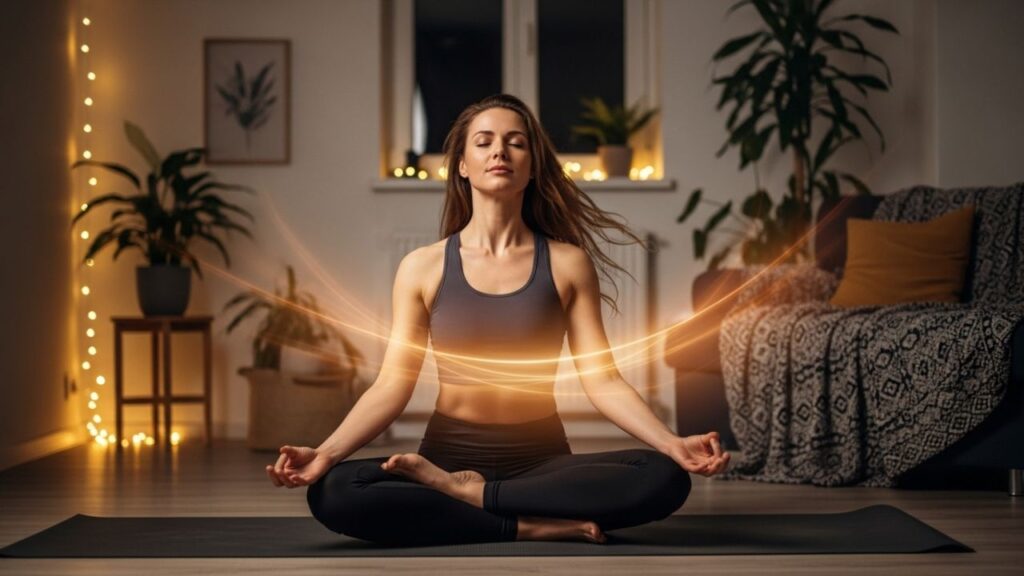
Finding Peace Through Yoga in a Digital World In our modern world the constant flow of information and online activity often leaves us feeling stressed and exhausted. To protect our mental and physical health we need ways to relax & step back from digital overload. Yoga is one of the most effective approaches for this purpose. Regular yoga practice offers many benefits including relaxation and awareness while giving us a much-needed break from technology. Anyone can benefit from adding certain yoga exercises to their daily routine regardless of their experience level. Yoga helps create a sense of calm that counters the anxiety caused by too much screen time. When you practice yoga you focus on your breathing and body movements instead of notifications and messages. This shift in attention allows your mind to rest and recover from the mental fatigue that comes with constant digital engagement. The physical aspects of yoga also play an important role in reducing stress. Stretching & holding poses releases tension that builds up in your muscles from sitting at computers or looking down at phones for extended periods. These movements improve circulation & help your body feel more energized and less stiff. Beyond the physical benefits yoga teaches you to be more present in the moment. This mindfulness carries over into other parts of your life & makes it easier to recognize when you need to disconnect from devices. You become more aware of how technology affects your mood and energy levels. Starting a yoga practice does not require expensive equipment or a gym membership. You can begin with just a few minutes each day in a quiet space at home. Simple poses and breathing exercises are enough to start experiencing the calming effects. As you continue practicing you will likely find yourself naturally wanting to spend less time online & more time engaged in activities that support your wellbeing.
Screens Off, Mind On: Evening Yoga Flows That Support Relaxation After Long Screen Exposure
Child’s Pose is a gentle resting position that helps calm your mind and relax your body. When you fold forward and place your forehead on the mat you create a sense of peace and stability. To practice this pose you should start on your hands and knees. Move your hips back toward your heels & stretch your arms forward on the mat. Rest your forehead down and take deep slow breaths. Stay in this position for 5 to 10 minutes to release tension & let your body fully relax.
Ground and Unwind with Child’s Pose (Balasana) — Calm Your Nervous System After a Day of Screens
This pose works well for reducing stress and making your nervous system feel more relaxed. It improves blood flow throughout your body and helps reduce anxious feelings. Follow these steps to practice it correctly:

– Sit with one hip against a wall.
– Gently lie back on the floor as you swing your legs up the wall.
– Allow your arms to rest naturally at your sides, or place your hands on your stomach.
– Close your eyes and begin to focus on your breath — slow, deep inhales and exhales.
– As you settle in, let your muscles soften and release any tension.
– Remain in this position for 5 to 10 minutes, staying relaxed and calm throughout.
Legs Up the Wall (Viparita Karani) — Gentle Inversion to Release Eye Strain and Mental Fatigue
This forward bend helps you unwind while stretching your back and hamstrings. It lowers stress levels & quiets your mind. How to do it:
– Sit on the floor with your legs extended straight in front of you and your toes pointing upward.
– Inhale deeply to lengthen your spine, then exhale slowly as you gently fold forward, reaching your arms toward your feet.
– Let your body naturally settle into the stretch while maintaining steady, mindful breathing.
– Remain in this pose for 5 to 10 minutes.
Seated Forward Fold (Paschimottanasana) — Quiet Stretch to Reflect, Reset, and Soothe Overactive Thoughts
Cat-Cow is a gentle flowing exercise that helps loosen your spine and neck. It connects your breathing to your body movements and sharpens your focus while lowering stress levels. Here is how to perform it: Start by getting on your hands and knees on a comfortable surface like a yoga mat.
– Start on your hands and knees. Align your wrists directly under your shoulders and your knees under your hips.

– Inhale deeply as you arch your back, lifting your head and tailbone toward the ceiling. This is called Cow Pose.
– Exhale slowly as you round your spine toward the ceiling, tucking your chin into your chest. This is known as Cat Pose.
– Continue to alternate between Cow and Cat poses for 1 to 2 minutes, syncing each movement with your breath.
Cat–Cow Flow (Marjaryasana–Bitilasana) — Rhythmic Spine Movement to Dissolve Tension and Bring Awareness Back to Now
Savasana serves as the final relaxation position that helps you absorb everything you gained from your practice while letting your body fully rest. Steps to Practice:
– Lie flat on your back with your legs stretched out and arms resting beside your body.
– Close your eyes and bring your attention to your breath.
– Let go of all muscle tension and allow your body to feel completely heavy against the floor.
– Stay in this position for 5 to 10 minutes, giving your mind and body time to recover.
Crafting a Mindful Digital Detox Through Yoga — Reconnect Within and Disconnect from the Screen Mindset
Adding yoga to your everyday life offers a straightforward method to disconnect from screens and devices. Here are practical suggestions for establishing a digital break:
Establish Clear Limits:
Set specific times each day for uninterrupted yoga practice. Ideal moments include early morning or just before bed, helping to foster a calm, focused mindset.
Arrange a Quiet Area:
Create a peaceful, tech-free space for yoga. Add elements like candles, calming scents, or gentle background sounds to enhance relaxation and focus.
Focus on Conscious Breathing:
During your session, engage in slow, intentional breathing. This mindful approach anchors you in the present and reduces distractions from devices.
Schedule Device-Free Periods:
After finishing yoga, extend your tech break. Go for a walk, read a book, or simply sit in silence to recharge without digital interruptions.