In our busy modern world stress affects almost everyone. Work demands and daily responsibilities along with constant distractions can harm both our minds and bodies. Yoga provides a practical solution for managing stress and finding inner peace. Through controlled breathing & gentle movement combined with meditation yoga helps people feel less anxious & think more clearly while creating a calmer mental state.
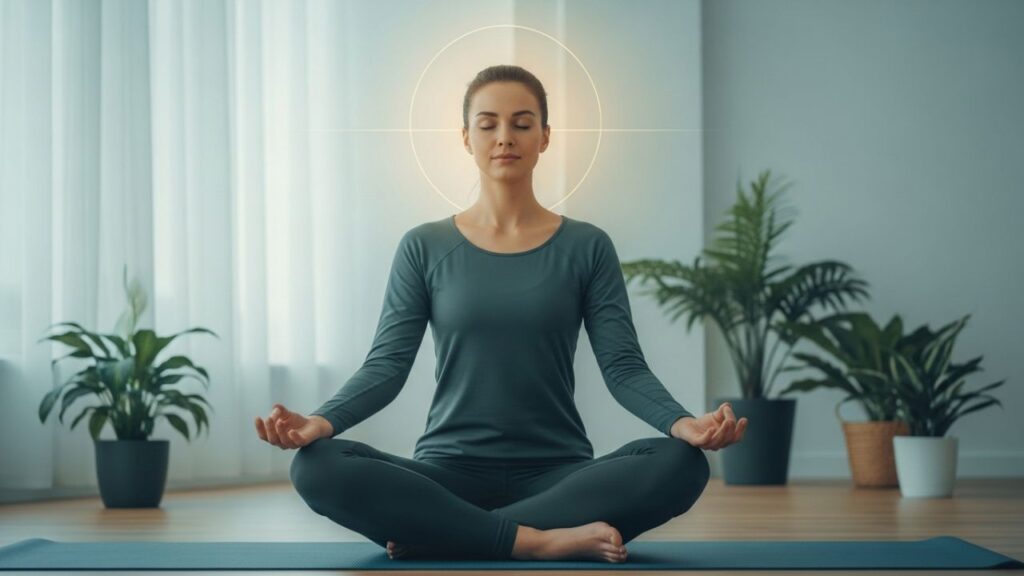
Why Is Yoga Effective for Stress Relief?
Yoga’s effectiveness in relieving stress comes from its holistic approach, combining breath control (pranayama), physical postures (asanas), and meditation. Together, these techniques help calm the mind, regulate the nervous system, and reduce the body’s stress response. Stress triggers the release of hormones like cortisol and adrenaline, which activate the “fight or flight” response. This can lead to increased heart rate, muscle tension, and anxiety. Yoga helps activate the parasympathetic nervous system—responsible for rest and recovery—leading to lowered cortisol levels and a deep sense of relaxation over time.
The Best Yoga Poses for Stress Relief
1. Child’s Pose (Balasana)
This restful pose stretches the back and hips, allowing for physical and mental relaxation.
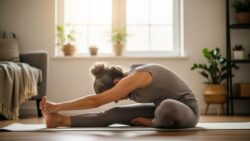
– Begin in a kneeling position with knees spread apart.
– Lower your torso down and extend your arms forward or beside your body.
– Rest your forehead on the mat and breathe deeply, letting go of tension.
2. Standing Forward Bend (Uttanasana)
A gentle inversion that soothes the nervous system and releases tension in the spine and neck.
– Stand with feet hip-width apart.
– Hinge at the hips and fold forward, bringing your head toward the floor.
– Keep knees slightly bent and allow the head to hang freely.
3. Legs Up the Wall (Viparita Karani)
This restorative inversion promotes blood flow and calmness by elevating the legs above the heart.
– Lie on your back close to a wall and lift your legs up against it.
– Keep your arms relaxed by your sides and close your eyes.
– Focus on your breath and allow your body to fully relax.
4. Corpse Pose (Savasana)
A traditional closing pose in yoga that encourages total body relaxation and integration of the practice.
– Lie on your back with arms by your sides and legs extended.
– Close your eyes and bring attention to your breath.
– Let go of thoughts and surrender to stillness.
The Role of Breathwork in Stress Relief
Pranayama, or breath control, is key in reducing anxiety and promoting calm. Controlled breathing activates the parasympathetic nervous system, slows the heart rate, and soothes the mind. Two useful techniques include:
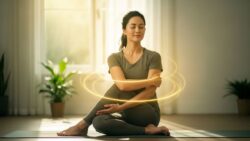 Yoga for Instant Relief: 5 Calming Poses That Melt Tension and Restore Deep Mental Balance Quickly
1. Alternate Nostril Breathing (Nadi Shodhana)
Balances the left and right hemispheres of the brain, promoting calm and focus.
– Sit upright with a straight spine.
– Close the right nostril with your thumb and inhale through the left.
– Close the left nostril with your ring finger, release the right nostril and exhale.
– Inhale through the right nostril, close it, and exhale through the left.
– Continue for several minutes.
2. Box Breathing (Square Breathing)
A structured breathing method that promotes stillness and resets the nervous system.
– Inhale for a count of four.
– Hold the breath for four counts.
– Exhale for four counts.
– Pause and hold for four counts.
– Repeat for several rounds.
Meditation and Mindfulness in Yoga
Meditation and mindfulness are vital in supporting stress relief during and after yoga. They help reduce anxiety, improve focus, and nurture emotional balance.
How to Practice Mindfulness in Yoga:
– Focus on the present moment: Tune into how each pose feels, your breath, and your surroundings.
– Let go of distractions: If your mind wanders, gently return to your breath or physical sensations.
– Practice self-compassion: Accept yourself without judgment and allow your practice to unfold naturally.